

- Knowledge
The Organisation Africaine de la Propri é t é Intellectuelle (OAPI) adopts a unique single trademark registration system, which involves one application, one examination, and one registration, automatically covering all 17 member countries. In this highly centralized system, the trademark opposition system plays a crucial role as the core legal avenue for stakeholders to prevent trademarks that may infringe upon their rights or violate legal provisions from obtaining regional registration. This article will systematically analyze the five core elements of the OAPI trademark opposition system.
1、 Trademark opposition acceptance agency
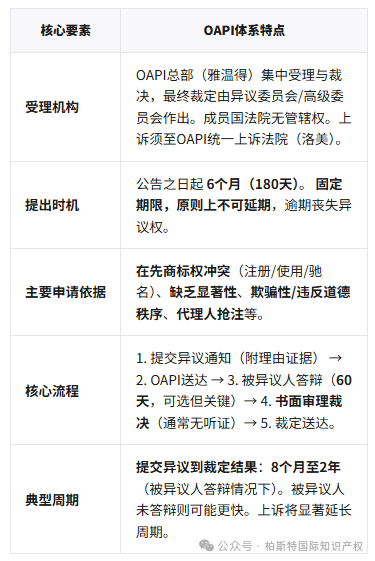
The singularity of the OAPI system determines that its objection procedure is entirely handled and adjudicated by the OAPI headquarters (located in Yaound é, Cameroon). The specific responsible department is its Trademark Department and higher-level Opposition Committee or High Commission (the specific name may vary with internal structural adjustments, but the functions are similar).
Core Responsibilities:
Trademark department: Receive opposition application documents (opposition notices), conduct formal examination to ensure compliance with requirements (such as deadline, fees, basic elements). Formally deliver the notice of objection to the applicant (respondent) of the opposed trademark.
Objection Committee/Senior Committee: This is the core adjudication body of the OAPI objection procedure. It is responsible for:
Receive the respondent's defense statement (if any).
Conduct substantive examination based on the written materials submitted by both parties (objection notice, defense statement, and attached evidence).
The legal and factual basis for the trial of the case.
Make the final written decision on whether the objection is valid (reject the opposed trademark application in whole or in part) or reject the objection (allow registration to continue).
Importance: OAPI's objection ruling is an administrative final ruling. This means:
The only legal remedy for those who are dissatisfied with the ruling is to file a lawsuit with the African Intellectual Property Organization Unified Court of Appeal located in Lom é, Togo.
The domestic courts of member states have no authority to hear appeals against OAPI trademark registration (including opposition rulings). This reflects the high degree of autonomy of the OAPI system.
2、 Timing of Trademark Objection: Strict Time Limit
Objections must be raised within the statutory window period after the official announcement of OAPI:
1. Official announcement:Trademark applications that meet the registration requirements after OAPI examination (formal examination and absolute reason examination) will be published in OAPI's * * Official Bulletin of Intellectual Property (BOPI) * *.
2. Statutory objection period:Within 6 months (180 days) from the date of announcement, it is the only legal opportunity for interested parties to raise objections.
3. Criticality and non deferability:
Any interested party (especially trademark owners with prior rights within the OAPI region) must submit a formal objection application to the OAPI headquarters within these 6 months.
Under the OAPI system, this 6-month objection period is fixed and generally not allowed to be extended (it is extremely difficult to obtain approval in practice). Missing this deadline means permanently losing the right to object to the published trademark under this system.
3、 Basis for Trademark Objection Application (Reasons)
Objections must be based on the statutory grounds specified in Annex III (on trademarks and industrial designs) of the OAPI Bangui Agreement and relevant implementing regulations. The main basis includes:
1. Conflict of prior trademark rights (relative reasons):
Prior registration: The objector has a previously registered trademark that is identical or highly similar within the OAPI area, and is designated for the same or similar goods/services, which may cause confusion among consumers.
Well Known Trademark: The trademark of the objector is well-known within the OAPI area (Well Known), and even if the objected trademark is designated for non similar goods/services, its registration and use may imply a connection with the objector, thereby harming the objector's interests or downplaying its distinctiveness.
Prior use and goodwill: If the objector uses (even if not registered) the same or similar trademark on the same or similar goods/services in the OAPI area and has established significant goodwill, the registration of the objected trademark may constitute counterfeiting (Passing Off) or cause confusion.
2. Lack of significance (absolute reason):The opposed trademark itself lacks significant features that distinguish the source of goods or services, such as:
Only composed of symbols or generic names that describe the characteristics, quality, purpose, quantity, origin, etc. of goods/services.
Only composed of symbols that have become customary in trade.
3. Deceptive or unethical/public order violation (absolute reason):Opposed trademark:
Deceptical, it is easy for the public to misunderstand the nature, quality, purpose, or origin of goods/services.
Contains content that violates public order or morality.
Contains protected symbols such as unauthorized national emblems, official imprints, and intergovernmental organization emblems.
4. Proxy or representative registration:The opposed trademark is applied for registration by the agent or representative of the objector without their authorization.
5. Other legally prohibited situations:Infringement of prior rights such as copyright, industrial design rights, name rights, etc. (requires specific proof).
The objector must clearly and specifically list one or more legal reasons on which they are based in the submitted objection notice, and attach preliminary supporting evidence or explanation.
4、 Trademark opposition process: primarily through written examination
The objection procedure of OAPI is more concise compared to some national systems, mainly relying on written materials:
1. Submit objection notice:
The objector shall submit a notice of objection to OAPI headquarters within the 6-month objection period (usually using a specific form or meeting specific format requirements).
The content includes: information of the objector and agent, information of the objected trademark (application number, announcement number, etc.), detailed statement of reasons for objection (indicating legal basis), signature of the objector/agent.
Pay the official objection application fee.
2. OAPI formal review and delivery:
The OAPI trademark department conducts a formal review of the opposition notice (whether it is within the period, whether the format is correct, whether the fees have been paid, and whether the reasons are clear).
After the formal examination is approved, OAPI will officially serve a copy of the objection notice to the respondent (trademark applicant) and usually notify the objector of the acceptance status.
3. The respondent submits a defense statement (optional but crucial):
After receiving the objection notice, the objector usually has 2 months (60 days) to submit a counter statement to OAPI.
The defense statement should respond to the reasons for objection, state the defense viewpoint and basis, and may submit rebuttal evidence.
Pay the official defense fee (if any).
Important reminder: If the objector fails to submit a defense within the prescribed time limit, OAPI will usually make a ruling based on the materials submitted unilaterally by the objector, which greatly increases the possibility of the objection being established.
4. Written review and ruling (core stage):
The objection committee/senior committee of OAPI is responsible for this stage.
The committee will conduct a substantive review based on all written documents submitted by both parties (objection notices and attachments, defense statements and attachments).
Usually, there is no Oral Hearing held. The ruling is mainly based on written materials, legal provisions, and precedents.
The committee shall make a final written decision, stating the reasons and results of the decision (upholding or rejecting the objection).
5. Delivery of Judgment:OAPI will deliver the ruling to both the objector and the respondent (or their representatives).
6. Relief channels:Either party who is dissatisfied with the ruling may file a lawsuit with the OAPI Unified Court of Appeal within the statutory time limit (usually 1-3 months after receiving the ruling according to OAPI regulations). This is the only judicial remedy available.
5、 Trademark opposition cycle: relatively predictable
The period of OAPI objection procedure is usually shorter and more predictable compared to some national systems (such as Ghana), mainly due to its centralized and written review oriented characteristics:
1. Fixed statutory time limit:
The objection period (6 months) and the respondent's defense period (usually 2 months) are fixed and cannot be extended in principle. This avoids infinite program delays caused by repeated delays.
2. Written review is the main focus:Omitting the complex stage of evidence exchange and the usual oral hearing greatly shortens the preparation time before the ruling.
3. Centralized adjudication institutions:All cases are handled by a specialized committee at OAPI headquarters, which is relatively efficient.
4. Typical cycle estimation (from submission of objection notice to receipt of ruling):
Standard procedure (respondent submits defense): If the respondent submits the defense on time, the OAPI committee needs time to review both parties' materials. It usually takes 6 months to 1.5 years from submitting the defense to receiving the ruling. Therefore, the entire objection process (from submitting objections to issuing results) takes approximately 8 months to 2 years.
The objector has not responded: If the objector fails to submit a defense within the prescribed time limit, the OAPI committee will mainly make a ruling based on the objection materials, and the ruling speed is usually faster. It may be made in a shorter period of time (such as waiting for a few more months) after the objection period defense period ends (about 8 months after submitting the objection).
5. Including cases of appeal:If the case is appealed to the OAPI Unified Court of Appeal, the entire dispute resolution cycle will be significantly extended, possibly by 1-3 years or more, depending on the court's schedule and the complexity of the case.
Summary:
The trademark opposition system of OAPI is an indispensable "safety valve" in its single registration system. For enterprises operating or planning to enter the OAPI region (17 member countries):
1. Active monitoring is crucial:It is necessary to closely monitor the trademark announcement information in the OAPI Official Gazette (BOPI) and promptly identify potential conflicting trademarks.
2. Strictly observe the 6-month golden period:Once a conflicting trademark is discovered, it is necessary to take action within the 6-month objection period. Failure to do so will result in the loss of the right to object.
3. Pay attention to the quality of written materials:Due to the fact that the procedure is mainly based on written review, the logical reasoning of the objection notice and defense statement, the accuracy of the legal basis, and the relevance and probative value of the accompanying evidence are crucial. The first submission should be as comprehensive and powerful as possible.
4. Professional agents are indispensable:Hiring professional intellectual property agents/lawyers proficient in the OAPI system and French (OAPI working language) to handle objection procedures can ensure that documents meet requirements, reasons are accurately explained, evidence is effectively organized, and non extendable time requirements are accurately grasped, maximizing the protection of one's own rights and interests.
5. Understanding cycles and remedies:There is a reasonable expectation for the relatively short period of the OAPI objection procedure (but fixed and non extendable), and it is known that the only way to appeal against a decision is through the OAPI Unified Court of Appeal.
6. Reconciliation may:During the objection process, both parties can also explore the possibility of reaching a Settlement Agreement or Coexistence Agreement with the assistance of professional consultants to resolve disputes more efficiently and cost effectively.
By effectively utilizing the OAPI trademark opposition system, companies can actively defend their brand assets and commercial interests in this important regional market.