

- Knowledge
Continuing from the previous article
Common situations of restaurant industry logos lacking significant features
According to the legislative intent of Article 11 (1) of the Trademark Law, the lack of distinctive features refers to the use of only the generic name, generic graphics, and generic model of the product, which directly indicate the quality, main raw materials, functions, uses, weight, quantity, and other characteristics of the product, as well as other marks that lack distinctive features. Common situations include the following categories:
1
1. The logo only has a common name for catering products. For example, "bread", "cake", "meat bun", "meat cake", "pimple soup", "hamburger", "Steamed rolls", "Mantou", "Xiaolongbao", "soup with pepper", "crispy tofu", "shrimp dumplings", "stewed noodles", "saozi noodles", "small noodles", "burning noodles", "onion noodles", "Ai Wowo", "Lvdagur (Glutinous Rice Rolls with Sweet Bean Flour)", etc.
2. The logo only has a common name for catering services. For example, "restaurant", "Chinese restaurant", "Western restaurant", "small dining table", "large cafeteria", "large food stall", "restaurant", "small restaurant", "noodle shop", "izakaya", "restaurant", "Hunan restaurant", "Shandong restaurant", "self-service cafeteria", "fast food restaurant", "restaurant", "bar", "tavern", etc.
3. The logo is only applicable to food and beverage products or services.

2
1. The logo only directly indicates the quality of catering products or services. For example, 'Super good'Eating "," high-quality "," premium products "," good products "," strict selection ", etc.
2. The logo only directly represents the main raw materials of the food and beverage products or services provided. For example, "old hens", "black goats", "hairy crabs", "wild vegetables", "pickled Chinese cabbage", etc.
3. The logo only directly indicates the function and purpose of catering goods or services. For example, weight loss meals, stomach nourishing foods, postpartum meals, etc.
4. The logo only directly indicates the weight and quantity of catering goods or services. For example, applying for the "80g" trademark on the product of "snacks mainly made of grains"; Please use the trademark "Three Meals a Day" in the "Hotel" service.
5. The logo only directly represents other characteristics of catering products or services. For example, (1) "owner restaurants" and "parent-child restaurants" that only directly represent specific consumption/usage objects or providers; (2) Directly indicating prices such as' ten yuan per serving '; (3) "Seafood restaurant", "Home style food", "Farmhouse food", "Edge cooking", "Spicy Hot Pot", etc., which only directly express the service content; (4) Hangzhou style cuisine, Chongqing hotpot, Sichuan flavor, sour and sweet, smooth and tender, medium cooked, crispy on the outside and tender on the inside, strong aroma overflowing, sweet and delicious, etc., which only directly express style or flavor; (5) Only directly indicating the usage methods of "dine in", "self-service", "takeout", etc.; (6) only directly indicating the production processes of "stir frying", "steaming", "teppanyaki", "iron pot stewing", "braising", etc; (7) 20220222 "," 2020 "," Lichun "," Qingming "," Dragon Boat Festival "," Mid Autumn Festival "," Summer "," Autumn Equinox "," Laba ", etc. that directly represent production time, season, year, and other characteristics; (8) The terms "all day" and "24 hours" directly indicate the expiration date, shelf life, or service time; (9) Directly referring to business premises, commodity sales venues, or geographical areas such as "food cities" and "snack streets"; (10) VR experience restaurants, unmanned self-service restaurants, rotating restaurants, etc. that directly represent technical features and business models.
3
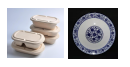
1. The logo is only composed of decorative patterns commonly used on the outer packaging, containers, or tableware of catering products. For example:
2. The logo is only composed of phrases, sentences, or common advertising language that represent the characteristics of food and beverage products or services. For example, "delicious dishes that make people salivate" and "plain tea and rice, the way to nourish the body".
3. The symbol is only composed of common surnames or common surnames plus common names, and generally belongs to other features that lack distinctiveness.
For example, apply for the "Wangji" "Wangji pie" trademark on "pie" goods, and apply for the "Lishi" "Lishi Spicy Hot Pot" trademark on catering services.
4
1. The logo is only composed of place names. If a sign is only composed of a place name and is designated for use on goods or services related to the catering industry, it is easy for the relevant public to associate it with the source, or it is not easy to identify as a trademark. Even if the applicant comes from the geographical area indicated by the place name, it generally falls under the circumstances referred to in Article 11, Paragraph 1, Item 2 or Item 3 of the Trademark Law and cannot be registered as a trademark.
2. The logo is composed of the common name of food and beverage products in place names. If the "generic name of place name catering products" belongs to traditional characteristic catering that has been passed down through history, objectively exists, and is closely related to the place of origin, it is not suitable for exclusive use by a certain market entity because it was jointly created by the people in a specific region. Generally, it belongs to the situation of lacking significant features as referred to in Article 11 (1) of the Trademark Law, such as "local specialty snacks of a certain town".
5
The logo consists of an independent text part and independent other elements. If the text part does not have significant features in the food and beverage industry's goods or services, the trademark as a whole should be recognized as lacking significant features. For example:
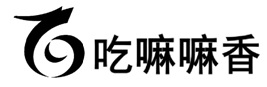
But if other independent elements have strong distinctiveness and the other independent elements or the trademark as a whole can distinguish the source of goods or services, the applicant may declare to waive the exclusive right to use the trademark for the textual parts that do not have distinctive features. If the applicant does not declare abandonment, it shall not be registered as a trademark.
Reasonable Exercise of the Exclusive Right to Register Trademarks in the Catering Industry
After obtaining registration for a catering trademark, the holder of the exclusive right to use the registered trademark shall also follow the principles of good faith and non abuse of rights, and shall use and reasonably exercise their rights within the scope of protection of the exclusive right to use the registered trademark in accordance with the law, limited to the trademark identification approved for registration and the goods or services approved for use.
(1) Standardized use of registered trademarks
The holder of exclusive rights to a registered trademark shall use the registered trademark in a standardized manner. When using a registered trademark, the use of the registered trademark shall be limited to the trademark logo approved for registration and the goods or services approved for use. If it is necessary to obtain exclusive rights to a registered trademark for goods or services outside the approved scope of use, or to change the registered trademark logo, a separate registration application shall be submitted.
The name, address, and other details of the registered trademark holder shall be consistent with those recorded in the Trademark Registration Book. If there is a change in the name, address or other matters of the registered trademark exclusive rights holder, a timely application for change shall be submitted in accordance with the law.
When using a registered trademark for catering, the exclusive rights holder should also pay attention to retaining evidence of use to prove that the exclusive rights holder is using the registered trademark truthfully, openly, and legally.
(2) Reasonable rights protection of registered trademark exclusive rights holders
When protecting their rights, the holder of exclusive rights to a registered trademark should pay attention to avoiding improper protection of the public domain or content belonging to public resources, as well as the legitimate and lawful rights of others. They should respect the legitimate and lawful use rights of others, and consciously maintain market competition order and social public interests.
Common names, graphics, models, and vocabulary or place names that directly represent the quality, main raw materials, functions, uses, weight, quantity, and other characteristics of goods, due to their inherent qualitiesInherent social responsibility belongs to public resources. If a registered trademark has the above elements, the exclusive rights holder of the registered trademark should exercise their rights reasonably and prudently. According to Article 59 of the Trademark Law, the holder of the exclusive right to use such registered trademarks shall not restrict or prohibit other entities from using these words or logos in commercial activities.
For example, the exclusive rights holder of the "Hometown Memory Hunan Cuisine" trademark registered on Class 43 restaurants and restaurant services shall not prohibit other market entities operating Hunan cuisine restaurants from labeling the type of dishes they operate as "Hunan cuisine" in a reasonable manner on store signs, menus, display windows, ingredient lists, packaging bags, and other places.
(3) Legitimate use by other market entities
Market entities other than the registered trademark exclusive rights holder shall respect the registered trademark exclusive rights when engaging in business activities related to catering goods or services. To avoid trademark infringement disputes, other market entities should only use the inherent meanings of vocabulary to describe certain characteristics of goods or services when using non significant parts of registered trademarks, and should not cling to others' trademark goodwill or confuse the source of goods or services. Legitimate use should comply with language usage habits and business practices, should not have the effect of distinguishing the source of goods or services, and should not lead to confusion and misidentification among the relevant public.
For example, other market entities may legitimately use the place names in registered trademarks in store signs, menus, display windows, ingredient lists, packaging bags, and other places through factual statements. However, in terms of usage, they should distinguish themselves from registered trademarks and avoid using them prominently through font, size, and color.