

- Knowledge
USPTO examiners evaluate trademark similarity and product/service relevance as core factors based on DuPont factors.
Key exception: Even if the trademarks are the same, if the goods/services have no affiliation (such as "APPLE" for computers and "APPLE" for funeral services), they may still be allowed to be registered.
2. Breakthrough point analysis
① Differences in goods/services:
Example: The prior trademark "TIGER" was registered in Class 9 (batteries), and the new application "TIGER" is used in Class 25 (clothing), which may pass the examination due to the lack of class association.
② Trademark differentiation design:
Example: The prior trademark was pure text SUN, and a new application for the SUN graphic logo may be accepted due to significant differences (In re Viterra Inc. case).
3、 Statutory exceptions for non essential rejection
1. Coexistence Agreement
① Applicable conditions:
The trademarks of both parties have not caused confusion in actual use;
The agreement specifies the scope of use, geographical restrictions, and other terms (which need to be submitted to USPTO for filing).
② Successful case:
In the case of Thomas J. Lipton, Inc., the conflict between "LIPTON" and "LIPTON TEA" was resolved through a coexistence agreement.
2. Obtain the consent of the prior trademark owner (Letter of Consent)
① Effect: USPTO usually accepts consent forms, but reserves the final discretion (In re Bay State Brewing Co. case).
② Content requirement: It is necessary to clearly state that there is no possibility of confusion and provide evidence (such as market coexistence records).
3. Partial Disclaimer
Strategy: Disclose exclusive rights to non significant parts of the trademark (such as common vocabulary).
Example: When applying for "CLOUD DATA SYSTEMS", declare the waiver of exclusive rights to "DATA SYSTEMS" to avoid conflicts with the "CLOUD" trademark.
4、 Response strategy
1. Response steps after receiving the review comments (Office Action)
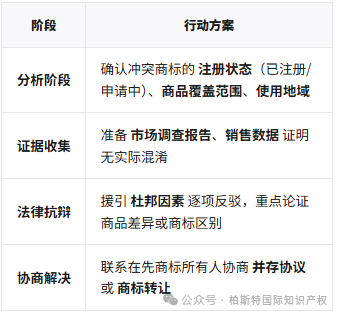
2. Procedural remedies
① Request for Concurrent Use Registration of Trademarks:
It is necessary to prove that the applicant isSpecific regionsUsing a trademark andWill not cause confusion(15 USC § 1052 (d)).
② Filing a trademark invalidation lawsuit:
If the trademark has already been registered, butNot used for three consecutive yearsIt can be revoked based on "unused" application (15 USC § 1064).
That's all for today's content sharing
If you have any other questions regarding intellectual property rights
Feel free to leave us a message anytime, and we will continue to answer your questions~~~